Why It Matters
Ghost gear is a practical conservation problem with practical solutions.
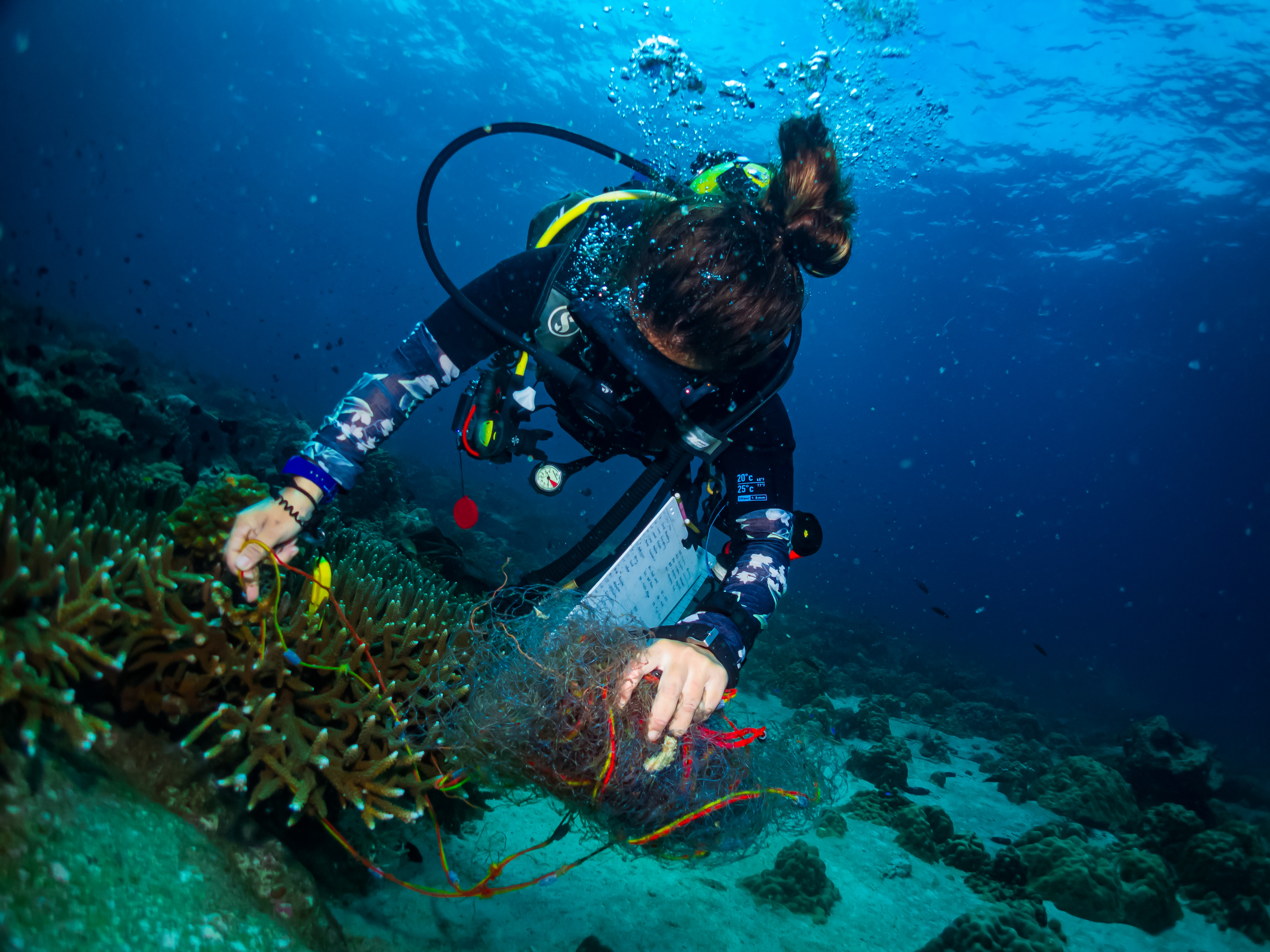
Removing abandoned gear helps protect coral, seagrass, fish, turtles, invertebrates, and the coastal users who depend on safer waters. The work is strongest when each mission leaves behind clear documentation and lessons for future response.
View related programsRecovery Method
How MRPO approaches ghost gear recovery.
Identify
Record reports, locations, reef risk, safety constraints, and partner roles before recovery work begins.
Coordinate
Plan safe field operations with trained teams, local knowledge, equipment, and clear conservation objectives.
Recover
Remove abandoned nets and fishing gear carefully so sensitive habitats and marine wildlife are protected.
Document
Capture photos, observations, quantities, coordinates where appropriate, and follow-up needs for future learning.
Conservation Value
What recovery work can improve.
Reduces coral reef damage from abandoned nets and lines
Protects turtles, fish, invertebrates, and other marine wildlife
Improves safety for fishers, divers, boats, and coastal users
Creates visible conservation results partners and communities can understand
Related MRPO topics
Ghost gear recovery is one part of a wider marine conservation system that includes reef monitoring, community coordination, habitat restoration, and public reporting.
Coral reef monitoringPartner with recovery missions
Support can include field logistics, recovery equipment, safety planning, communications, documentation, or long-term conservation program backing.
Contact MRPO